
Know Before You Grow:
It’s Important to Review the Updated Zone Map in Maine
The USDA released a new version of the Plant Hardiness Zones Map in 2023. The map is described as now being more specific and detailed. This map is updated and adjusted based on a 30-year average of the lowest annual winter temperatures. The information is obtained from weather stations throughout the country. Many areas in Maine will find that their zones have changed to reflect that temperatures in many regions have increased over the last decade.
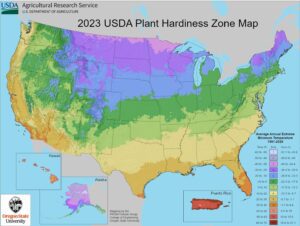
To find the Plant Hardiness Zone at your location quickly, OPEN the map link and enter your zip code in the Quick Zip Code Search box, or click anywhere on the map to view the corresponding interactive map.
The USDA Plant Hardiness Zone Map is the standard by which gardeners and growers can determine which perennial plants are most likely to thrive at a location. A broadband internet connection is recommended for the interactive GIS-based map above.
For further instructions on using this map, visit How to Use the Maps.
To view/print national, regional, or state Plant Hardiness Zone Maps, visit Map Downloads.
How to Use the USDA Plant Hardiness Zone Map
Keep this updated map in mind when selecting plants for your garden beds. While plants will likely do well if zoned for colder areas (greater hardiness), purchasing plants that aren’t zoned for your lowest temperatures and other conditions can lead to winterkill. You don’t want to buy an expensive perennial that isn’t zoned for hardiness required in your area or that perennial will likely be reduced to an annual.
What Does Hardiness Mean for Plants?
The USDA Plant Hardiness Zone Map is the standard by which gardeners and growers can determine which perennial plants are most likely to thrive in a given location.
The hardiness of plants describes their ability to survive in adverse growing conditions. It refers to climatic adversity, meaning a plant’s ability to tolerate cold, heat, drought, flooding, or wind. These factors are what is typically considered measurements of hardiness.
What Zone Numbers and Colors Mean
The Plant Hardiness Zone Map (PHZM) is based on the average annual extreme minimum winter temperature, displayed as 10-degree F zones. The zones range from Zone 1 (coldest) to Zone 13 (warmest). Each zone is also divided into half zones designated as ‘a’ and ‘b’. For example, Zones 5a and 5b are 5-degree F increments, representing the colder and warmer halves of zone 5.
When you are shopping for perennials for your gardens, zone numbers are typically listed with the descriptions of plants in catalogs and plant tag information. One of the most common mistakes enthusiastic gardeners make is to purchase a plant because they “love it”, disregarding the zone designation for the plant. Consequently, they may only get to enjoy the plant for one season if the Maine winter proves too harsh for that particular plant.
Each zone is assigned a color along the chromatic spectrum produced by a prism (i.e., red, orange, yellow, green, blue, indigo, and violet). These colors simply give each zone a graphical representation, making colors easy for the eye to follow. The overlay of colored zones on the map provides a tool for understanding and comparing plant cold-hardiness across Maine, and the United States.
How to Use the Map when Growing Plants
Plant Hardiness Zone Maps (PHZM) should serve as general guides for selecting and growing perennial plants. Zones in this edition of the USDA PHZM are based on weather data from 1991-2020. This does not represent the coldest it has ever been or ever will be in an area, but it simply is the average lowest winter temperatures for a given location for this 30-year span (1991-2020).
When you grow plants at the extreme range of the coldest zone where they are adapted means that they could perish should you experience a year with a rare, extreme cold snap. Gardeners should keep this in mind. Past weather records don’t offer a guaranteed future forecast of temperatures. Always consult with other knowledgeable producers and gardeners such as your local, established nursery or extension service.
It’s also important to realize that many other environmental factors, in addition to hardiness zones, contribute to the success or failure of plants. Wind, soil type, soil moisture, humidity, pollution, snow, and winter sunshine can greatly affect the survival of plants. Warm season heat and moisture balance is also important. The way plants are placed in the landscape, how they are planted, and their size and health can also influence their survival.
AC Yard Services offers full garden planning and planting services – just CONTACT US to learn more about how we can help make your gardens thrive!
For more information:
ars.usda.gov/news-events/news/research-news/2023/usda-unveils-updated-plant-hardiness-zone-map
